
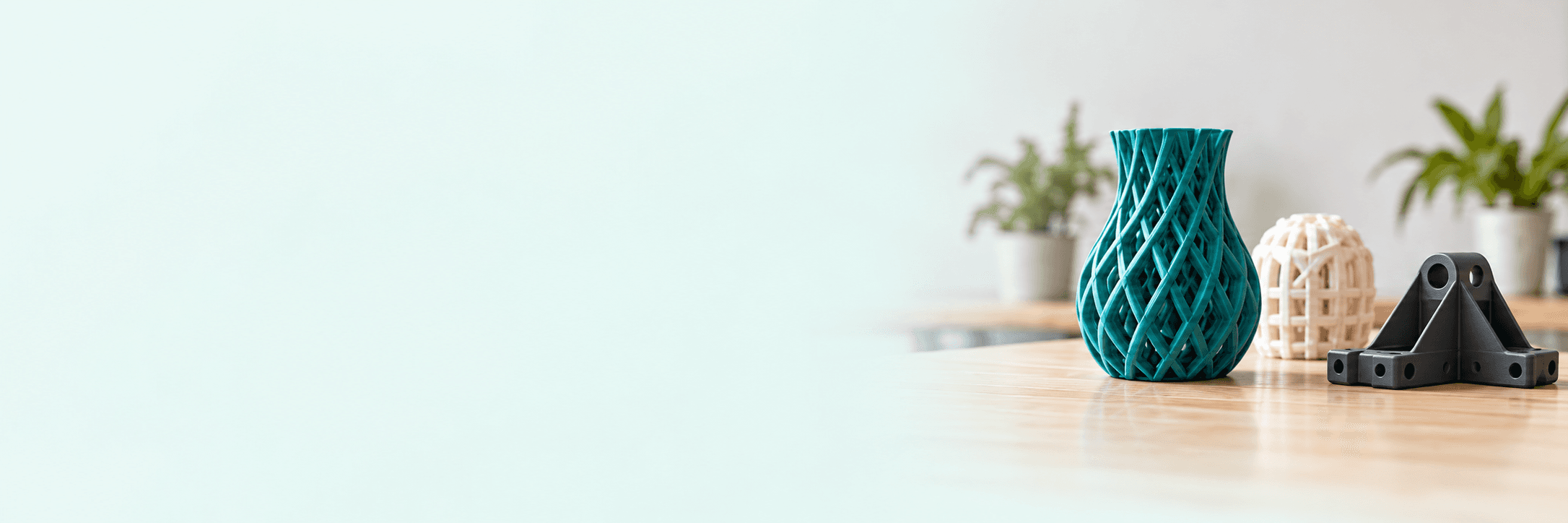
PLA (polylactic acid) is the most widely used 3D printing material. It's made from plant-based sources such as corn starch or sugar cane, it prints easily, and it comes in hundreds of colours and finishes. If you're getting something 3D printed for the first time, there's a good chance PLA is the right choice.
What PLA is good at
- Affordable. PLA is one of the lowest-cost materials, which keeps print prices down.
- Detailed and accurate. It holds fine detail and sharp edges well, so models and figurines come out crisp.
- Huge colour choice. Solid colours, silk and metallic finishes, matte, glow-in-the-dark, and wood- or metal-filled versions.
- Easy to finish. It can be sanded, primed, and painted.
- Low odour. It gives off very little smell while printing, so it's common in home-based shops.
Where PLA falls short
- Heat. PLA starts to soften at around 55–60 °C (130–140 °F). A PLA part left on a car dashboard in summer can warp or droop.
- Outdoors. Sunlight and weather slowly weaken it. It's fine for a season, but not for items meant to last outside for years.
- Brittleness. PLA is stiff rather than tough. It can snap under a sharp impact or when bent, instead of flexing.
Is PLA right for my project?
PLA is usually a good fit if your item:
- will be used indoors
- doesn't need to survive heat or repeated impacts
- needs to look good, show fine detail, or come in a specific colour
- is a prototype or test piece where low cost matters
If your part will be outdoors, in heat, or under stress, ask your print shop about PETG, ASA, or ABS instead.
Types of PLA
- Standard PLA: the everyday version described on this page.
- PLA+ / Tough PLA: a modified PLA that is less brittle and handles impacts better.
- Specialty PLA: silk, matte, wood-fill, metal-fill, and glow-in-the-dark versions, chosen mostly for looks.
Common questions
Is PLA biodegradable? PLA is made from plant-based materials and can break down, but only in industrial composting facilities with high heat. It won't break down in a backyard compost bin or in nature within any normal timeframe.
Is PLA food-safe? Not reliably. Even if the raw material is food-safe, 3D printed parts have tiny grooves between layers that can trap bacteria, and colourants or the printer itself can add contaminants. For anything that touches food, ask your print shop about food-safe options and coatings.
Can PLA be painted? Yes. PLA takes primer and paint well. Many shops offer priming and painting as a service.
How strong is PLA? Strong enough for most decorative and light-duty household items. For parts that take real force, snap together repeatedly, or must bend, a tougher material such as PETG or PLA+ is usually better.
Find PLA printing near you
Ready to get something printed? Find shops that print in PLA near you, or upload your file for a quote. Not sure which material to choose? Choose by what you're making or ask a local shop.